Wednesday, September 18, 2013

No, we're not eating our way through France!

Blois, France:  no, we're not eating our way through France, but I just finished eating the most sumptuous meal I've ever had at Les Baquettes Rouges ("the red benches") in this old town on the Loire River...the roasted angle hair pasta on prawns was amazing.  But I digress.  Our primary purpose for coming to France was to visit Alex, get acquainted with Florise & meet their French family.  We spent a couple nights in Gee, at the community where  they live & will return at the end of this week to see them again & participate in a big family gathering.   While there, we stay in Alex &  Florise's yurt while they sleep in a travel trailer.  
Alex & Florise's compound

Alex took us for a walk along the quiet country road that fronts his home

Florise parents compound is called La Pinellerie or "The Pines"

Alex & Kate enjoying a simple lunch shortly after our arrival

The first night there, we had the most wonderful meal!  Nine of us were gathered around Florise parent's table & the squash soup with cream was to die for.  But I digress.
A delicious meal to welcome us to Florise's family

Exploring the ramparts of Chateau de Angers
Alex & Florise recently started jobs working in a nearby nursery.  Since they work M-F, we decided to explore the Loire River Valley this week & visit some castles.  We rented a Honda that's similar to our Fit so it's easy & economical to drive.  Kates's been a great navigator! We appreciate having our own "wheels" & independence.  We chose Blois because it's in the center of the Loire River Valley.  We're staying in tiny quaint hotel ("Cote Loire-Auberge Ligerienne") with just 7 rooms.  The hotel was built in the 16th century & is the oldest auberge in Blois.  Today we visited Chateau de Chamborg, probably the most "over the top" castle of many in the area.  Tomorrow we'll check out, then drive to Amboise where we'll visit Le Clos Luce, the manor house where Leonardo Da Vinci spent the last years of his life at the invitation Francois I, the king of France .  We may also visit Chenonceau, a castle that spans the Cher River & if the weather is sunny, we might rent bikes & go for a ride.

Before we left Gee, we took Alex & Florise to eat at a riverside restaurant where my salmon was delicious.  Alex enjoyed steak tartare.

Steak tartare


Along the Loire River
 And least you think we're just eating our way through France, we have enjoyed many picnic lunches on park benches as we travel, thought the French cheese, crusty baguettes, yougurt, & fresh fruit finished off with a pan au chocolat makes even an informal park bench picnic meal pretty special.
Picnic lunch on park bench along Loire River

We did spend 3 nights & 2 days in Paris but I'll try to describe that experience in a subsequent post.  Guess that's all for now.

Tuesday, September 10, 2013

Ready for our next adventure: France!

We're ready for our next adventure, this time a 4-week trip to France.  Our bags are packed & sitting in our living room ready for the trip to the airport in the morning.  We're excited to see our son, Alex, who's been living in France since January.  And to see our new daughter-in-law, Florise, and meet her family!  Tomorrow we fly from PDX to Denver, change planes for a flight to Iceland, change planes a 2nd time to our final destination, Paris, the City of Light.  We expect to arrive early Thursday afternoon.  After clearing customs & immigration, we'll locate the Paris Transit Authority's Roissybus.  The bus takes 45-60+ minutes to get into Paris, depending on traffic.  We'll get off at the Opera National de Paris stop, then locate the Paris Metro, Line 1.  We'll take the Metro to the 2nd stop from the end (Porte de Vincennes).  From there it's a short 300 meter walk to our Bed & Breakfast.  Expect we won't arrive at the B&B until 4-5 PM & am sure we'll be beat.  Hope it doesn't take our internal body clocks too long to adjust to the time change.   Well, that's all for now.  Hopefully my next post will be from the City of Light!  

Tuesday, December 4, 2012

Communicating in rural Kenya: cell phones & the Internet

(Editor' Note:  I just discovered I never posted this blog entry while in Kenya.  Apparently I was having Internet connection problems when I wrote it, just after arriving in Migori by cross-country bus from Nairobi.  Now that I'm home, I want to post it, but also add a postscript.  Looking back, I was surprised how easy it was most of the time to connect to the Internet in Kenya-even in rural areas.  Kenya's communications industry has done a great job  getting Kenyans "connected" by building an extensive cell phone network throughout the country over the last few years.  It seems nearly everyone has a cell phone or access to one.  This means you can connect to the Internet through the phone system if you have a WiFi modem for your computer.  Although many rural villages like Bware are just starting to get limited electricity (e.g. none of the six schools where we conducted screenings have electricity yet), many adults in Bware have cell phones.  So how do they get their phones charged if they don't have electricity?  Well some people have solar chargers while others use a cell phone charging system Kate discovered---she took her phone to a little shop where she paid a small fee & left it overnight; in the morning it was charged.  She thinks they used some type of car battery system to charge the phones.  So just like in the USA, having a cell phone lets people connect to each other, conduct business, and even pay bills using a system called "M-Pesa."  All in all, pretty cool!)
So this is the blog I originally wrote 9/27/12:
Having lots of trouble connecting to Internet so won't be able to post as much as I hoped unless problems can be worked out. Have been unable to connect to Internet using my tablet computer using the Internet modem purchased in Nairobi. (Editor's note: I discovered that although I had the correct modem, no phone card had been purchased to "charge it up."  Once I did that, the modem worked fine).  Tonight using a friend's computer but connection is slow. It's just started raining outside but it's nighttime-8:30 PM, so it's not a problem. Arrived in Migori in western Kenya yesterday after 7 1/2 hour bus ride. Passed through gorgeous country inc dry Rift Valley-saw herd of zebras, lots & lots of small cattle & goat herds being tended by men or boys. Also lush countriside as we climbed in altitude; lots of banana trees, sugar cane, corn, tea. We're staying in two cottages in Migori on the St Joseph Mission Hospital campus.  Will write more later.

Personal safety in a developing country


Upon our return to Vancouver WA, friends ask:  did you feel safe during your visit to Kenya?  Our answer:  yes, we felt safe & we didn't experience any scary incidents during our visit.  However we were encouraged to be aware of our personal safety & to take precautions .  Ray of Hope organizers urged us not to go into town alone at night & to walk in groups whenever possible.  If one of the women on the team needed to walk home  to their lodging nearby after dark, another team member always accompanied them.  In Migori,  a high hedge and gate protected our housing compound on the St. Joseph Hospital property.  The gate was closed & locked at night & a guard was stationed just inside all night long.  We were reminded to lock the doors to our house when we were gone during the day, but also at night while we were sleeping.  In Bware, our host family lived far off the main road.  Nevertheless, they had a steel door with three deadbolts they slid into place each night after everyone was ready for bed.  In Nairobi, the nicer homes in the more affluent neighborhoods had walls surrounding their property, topped with broken glass &/or barbed wire, steel gates with guards, and sometimes security cameras.  During our stay in Migori, we learned a female Peace Corps volunteer was raped.  However, most alarming to us was an incident that occurred on our last weekend in Migori.  Alice, our wonderful cook & housekeeper, was held up at gun point on her way to work!  Her assailant stole her money & cell phone but she was not injured.  Occasionally we read in newspaper about incidents of political violence.

We're concerned Kenya may experience a repeat of the 2008 violence that occurred after their last national elections when over 1,000 persons were killed and over 600,000 persons lost their homes as a result of ethnic violence.  The Kenyans we talked to don't expect a repeat of this level of violence when national elections occur again in March 2013.  They believe Kenya's new constitution, adopted 2 years ago, will head off any repeat of violence.  However, with over 40 ethnic groups in Kenya, many who are distrustful of other groups, additional violence is definitely a possibility.

Tuesday, November 20, 2012

Kenyan transport

Our health team walked a lot-just as many Kenyans do

We've been home 10 days, have returned to work & resumed our normal, comfortable life in America.   However, thoughts of Kenya & our myriad experiences there keep flooding our brains.    I decided I wanted to write a blog about Kenya's transportation system.
Girls we met near our host's home in Bware
Walking from our home to St Joe's carrying donated medical supplies from Seattle's Virginia Mason Hospital

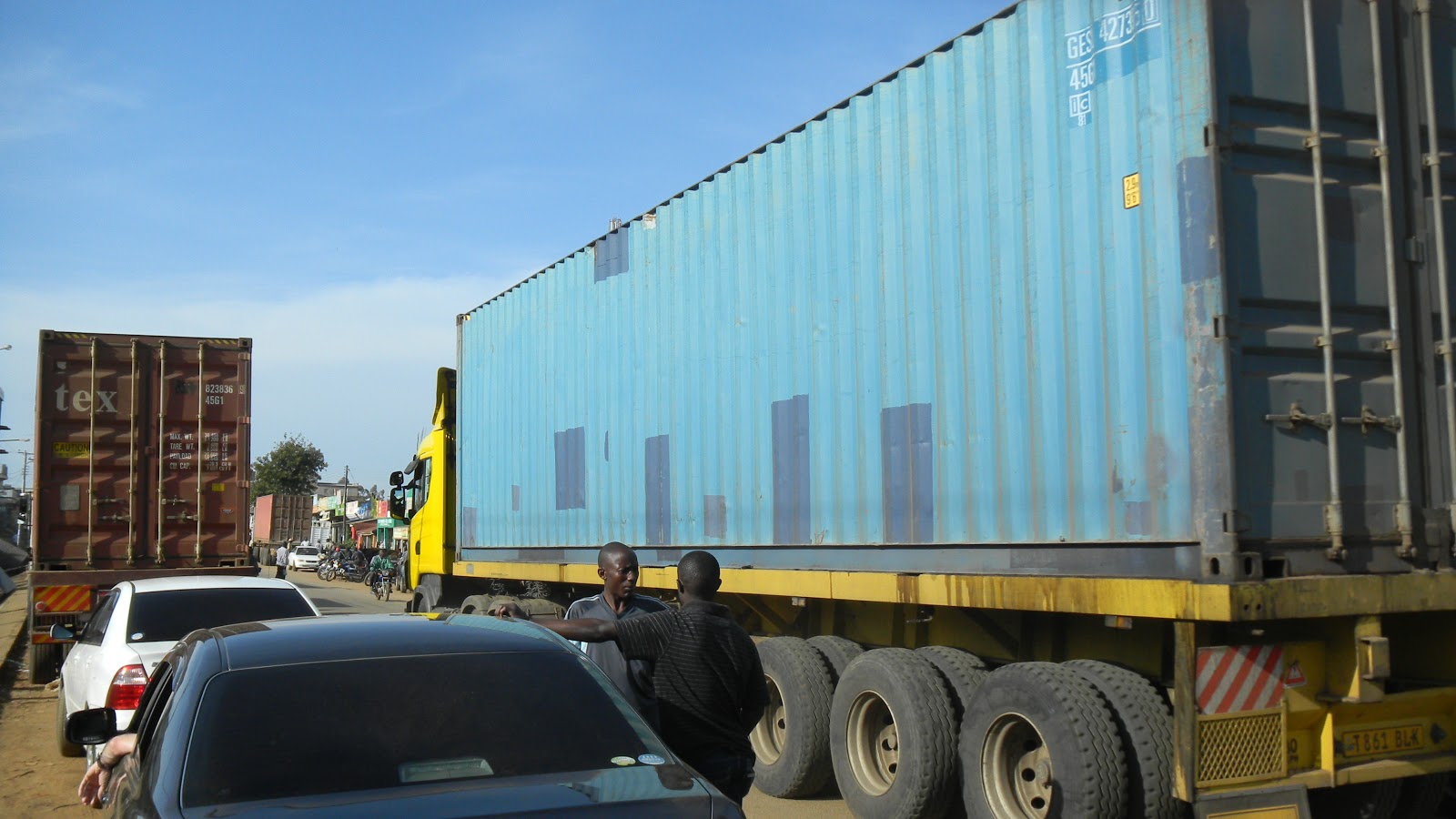
Walking:  This is by far the most dominant form of transportation.  People were walking, walking everywhere.  They walk on the roads and streets in villages like Bware, small & medium sized towns like Migori, and even the largest city, Nairobi. They carry amazing loads--water, of course, but also children, bags and bundles.  We saw one woman carrying a bed on her head!  Sometimes people push or pull carts.  When people don't want to walk, can't walk, or need to haul something that's too hard to carry by themselves (e.g. babies & small children, groceries, supplies), then they hire a piki-piki (motorcycle taxis). 

Kate & BUCHWA members walked daily to making home visits
Kids carrying loads


Delivering passenger to St Joseph Hospital gate
Waiting for passengers outside Migori District Hospital gate
A piki-piki would deliver us to our host family's front door
Piki-pikis:  Ubiquitous, they can be found anywhere people congregate.  Men on motorcycles wait for passengers at cross roads, outside entrances to hospitals and major intersections in towns.  You can phone a favorite piki-piki driver & he will pick you up at your doorstep!  Most piki-piki drivers do NOT wear helmets & I never saw a helmet for a passenger.  Piki-piki transport is extremely important to Kenya's economy, especially in towns & villages.  Besides hauling people, piki-pikis transported a wide variety of materials, including:  pipes for a tent canopy at a political rally,  steel straps so long they dragged down the dirt road, towers of plastic milk carton-type containers filled with bread, water-filled jerry cans, HUGE stacks of sugar cane (one bunch was strapped side-ways over the gas tank, the other was strapped to the rear of the cycle) and firewood.   Loads seem limited only by the driver’s imagination!

Matatus:  These are privately operated small buses which run up and down the road.  Theoretically Matatus hold 14 passengers, but squeezing on extra passengers maximizes profits.  The  Matatu staff  includes  a driver and a conductor.  The conductor is an energetic guy who rides on the running board or hangs out the open door of the van.  Sometimes he acts like a tout cajoling and bargaining with customers, squeezing them on, tracking their destinations, arranging their baggage.  He raps on the side of the van when debarking passengers are out, or boarding ones are on, so driver knows he can take off.  Our only Matatu ride was not even a real squeeze by Kenyan standards but it was too much for me.  First we flagged down several, waving them off when they seemed too full.  With rain threatening, one with 12 passengers stopped.  The conductor said they had enough room “he would just rearrange.” A large man moved to the back, a small man moved in next to the driver. Kate and I were levered into the front seat next to him—plenty of room!  Seat belts you ask?   Forget it.

Bicycles:  made with sturdy frames & forks to hold up on the rocky, bumpy dirt roads; often equipped with a milk crate strapped to the rear as a carrier.
A long distance coach with matatus passing in other lane

Another long distance coach in Migori


Long distance bus coaches (similar to Greyhound buses):  useful for transporting school groups on outings & members of the public over long distances (e.g. Nairobi to Migori-8 hours, Migori to Mombassa-14 hours); comfortable with good views because you ride high up; holds a lot of baggage in the storage compartment under the seats; on-board toilets?  No way.

Ray of Hope-Kenya used the safest & best taxi drivers to transport us 
Lorries & taxis on main Migori road


Other vehicles:  taxis, private cars (fairly rare), lorries, mules, donkeys, oxen


Migori-man & mule on road btw our home & St Joe's Hospital
Bware-oxen & wagon passed on road next to Dispensary


Friday, November 2, 2012

Safari - Masai Mara is Wildlife Extraordinaire!

Day 41-Thursday, November 1-Ol Moran Tented Camp, Masai Mara National Reserve
How can I describe what an amazing experience we've had viewing wildlife in Masai Mara National Reserve over the last 2 days?  I'm afraid I'll run out of superlatives.  Maybe a short description, then I'll let the photos speak for themselves:

This grazing herd completely surrounded us at one point 

Lion prints in mud was promise of what was to come!

Cub drinking after gorging itself-it's belly was so round!

King of beasts

Hippos resting on shore of Mara River-they travel 10-15 km at night to graze

Amazing lizard on rock near Mara River

Two cheetahs resting-must have fed earlier

Family group

Entrance to Masai Mara National Preserve

3 weeks after the major wildebeest migration-still saw 1,000s
Wildebeests-Thousands & thousands everywhere...and these are the stragglers from the major migration of millions of animals that occurred 3 weeks ago as they began their return journey to the Serengeti Plains in Tanzania immediately south of Masai Mara.  They will return north in June.

Lions-Close-up views 2 major prides after they'd made kills; one was lazing around, obviously stuffed, while the 2nd was in the midst of tearing apart a wildebeest the lionesses had killed 1-2 hours previously.  Neither seemed concerned in the slightest in our presence.  We got fabulous photos & videos.  You will be amazed!  Viewed another group of 4 females in open grassland; however, they seemed interested in us (looking at us as possible prey?), making us think it had been a while since they'd eaten!

Elephants-many different herds:  one large herd walked towards our open-topped vehicle as they grazed  & seemed completely unconcerned; at one point we were completely surrounded by them; another smaller herd gathered in the shade of an acacia tree, rubbing against its bark with their skin; that group of females included a small calf & an adolescent in addition to moms & aunties.

Giraffes-so many different groups; so graceful as they walked by us, seemingly in slow motion.

BIG croc next to Mara River
Hippos & a huge crocodile-along the banks of the Mara River.

Cheetahs-observed a a female & her adolescent offspring, lazing in the sun, apparently stuffed after a kill, resting, unconcerned by our vehicle & our presence; but I noticed their rapid respiration rate (being the good nurse that I am) and counted them (~128 breaths/minute).
Servile cats-saw 2 of these elusive, solitary cats our guide says are rare to see; warthogs-frequently saw a mother followed by numerous piglets (?).

Zebras, Cape buffaloes, Thompson gazelles, impalas-too numerous to count or describe.
A zebra foal & his mother

Saw many solitary ostriches like this male
Masai Mara has got to be one of the most amazing places on earth to see wild animals on their own terms in their own habitat!

Cute safari couple at Mara River

"Do you want to visit Tanzania" our park ranger asked?  "Yes" we replied, after learning it was only a short distance away.


Altho we did not see any leapords, we did see evidence of their kills hanging in trees to keep it safe from hyenas & jackals.

We toured a nearby Masai village.  They entertained us with traditional dancing. Here, the higher a young man jumps, the less cows he needs to pay for a bride price!

The women in our group with the Masai men.

Teaching us how they make fire
Lion king


Elephants everywhere


Here you can see how close they were to our vehicle

Thompsons gazelle

Gathering around a watering hole

Weaver bird nest

Our group watching for animals (the roof elevated so we could stand & search & take photos)

James wearing his new Masai blanket on our tent/cabin porch, Ol Moran Tented Camp

They're rubbing against the tree to itch their hides-we could hear them rubbing against the tree

Saw many giraffes

They walk so gracefully-almost in slow motion!

Alert but relaxed cheetah

Acacia tree before big storm hits the park in late afternoon


Cape buffaloes-they always looked cranky & ready to charge